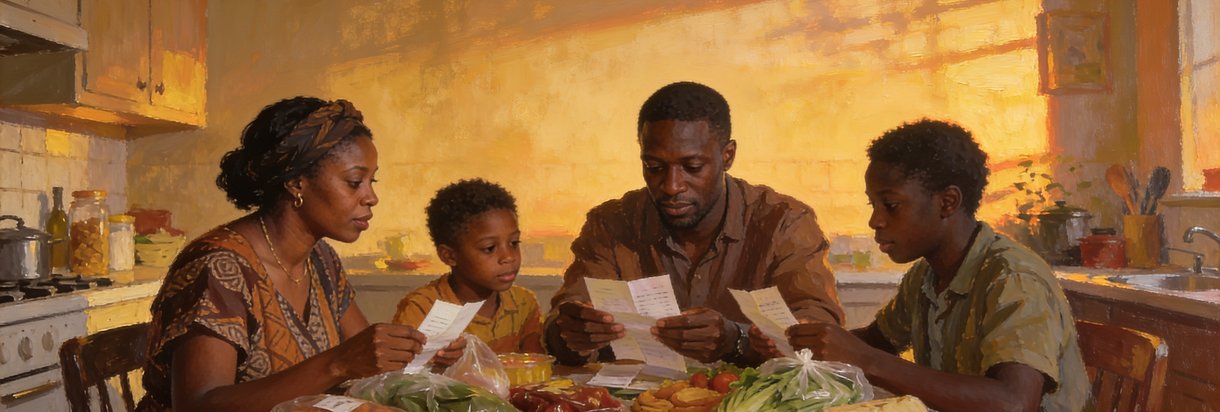
For millions of Nigerian households, 2026 has been an exercise in stretching the naira. When the rent, the transport fare, the electricity bill and the food basket all compete for the same shrinking income, something has to give. Increasingly, something does.
Where it bites
With food inflation at 17.5% (National Bureau of Statistics) and energy costs elevated, essentials now swallow a larger share of the monthly budget than a year ago. Families report cutting portions, switching to cheaper staples, delaying school fees, or falling behind on bills. Each choice buys a little breathing room at a cost elsewhere.
A national picture
The strain is broad, not niche: the World Bank estimates about 139 million Nigerians are poor or vulnerable to poverty. Behind that figure are countless small adjustments — a skipped meal, a postponed medical visit, a borrowed fare — that rarely make headlines but define daily life.
Coping, and its limits
Households lean on informal credit, extended family and side hustles to bridge the gap. But those buffers thin the longer the squeeze lasts, and debt taken on today becomes tomorrow's burden. That is why how confident people feel about paying their bills is such a direct read on financial stress.
A number that tells the story
More than any single statistic, the share of families worried about the next bill captures the texture of the cost-of-living crisis. It shows whether the tentative easing in the data is reaching real kitchens, or stopping at the spreadsheet.
Have your say
How concerned are you about being able to pay your bills this month? Add your view below.