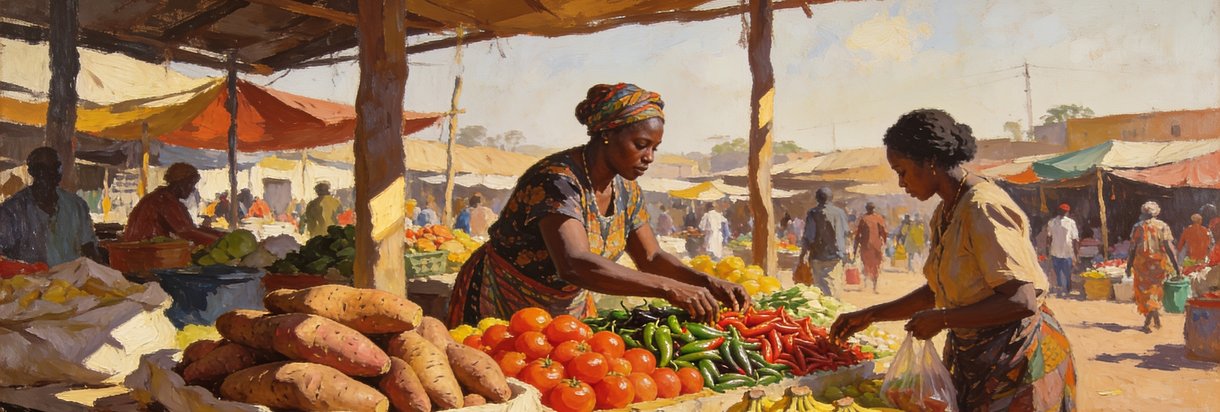
For shoppers from Mile 12 in Lagos to Wuse market in Abuja, the sting is familiar: the basket costs more than it did a year ago. Prices are still rising, just a little more slowly — inflation held at 15.9% in June 2026, according to the National Bureau of Statistics. The relief, so far, is more statistical than real.
Food hurts most
Food inflation ran at 17.5% in June (NBS), driven by staples such as yam, tomatoes and garri. Because food is the largest single line in most household budgets, it shapes how people feel about the economy overall. Shoppers describe buying in smaller quantities and switching to cheaper substitutes just to keep plates full.
Energy ripples through
Fuel and transport feed into nearly every price, because almost everything has to be moved to market. Petrol has swung sharply over the past year, though competition — including price cuts by the Dangote refinery — has at times eased the pressure. When transport costs fall, the relief slowly reaches the market stall.
Incomes lagging
Wages have trailed prices, and the World Bank estimates around 139 million Nigerians are poor or vulnerable to poverty. For many families, the monthly question is no longer how to save, but how to cover the essentials — and which corner to cut when the numbers do not add up.
A tentative easing
There is a sliver of relief in the data: the pace of price rises has slowed, and analysts cited by The Guardian point to a steadier naira. Whether households feel that easing in 2026, or merely read about it, is the open question this tracker helps answer.
Have your say
How concerned are you about the cost of living right now? Add your view below.