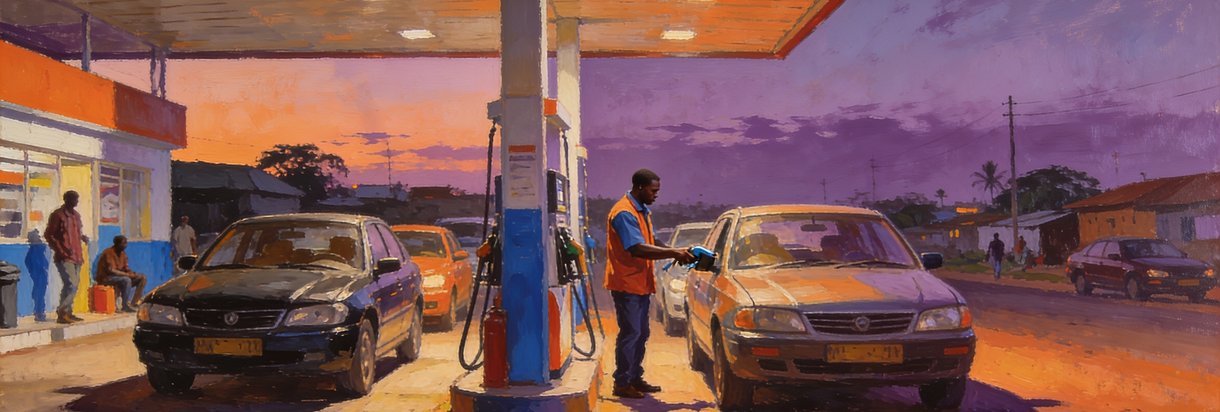
Few policies have touched Nigerian wallets as directly as the end of the fuel subsidy. Petrol that averaged around ₦1,034 a litre in early 2026, per the National Bureau of Statistics, has traded higher through the year. It has reshaped budgets from Lagos to Maiduguri, one fill-up at a time.
Why the subsidy went
Successive governments spent vast sums holding pump prices down, money critics said enriched smugglers and starved schools and hospitals. Removing the subsidy in 2023 was meant to free those funds for other needs and end years of waste. But the immediate effect was a painful jump at the pump that rippled across the economy.
A cost that ripples
Because fuel moves goods to market, its price feeds into transport, food and almost everything else. Competition has offered some relief: the Dangote refinery has at points cut its price, easing the squeeze and reshaping a market long dependent on imports. For commuters, though, every fare rise is a fresh reminder of the policy's reach.
A divided verdict
Opinion remains split between those who accept the reform's long-term logic and those feeling the immediate pain most acutely. For small traders and daily commuters, the debate is settled anew each time they fill a tank or pay a fare. That is why sentiment on the subsidy is worth tracking, not assuming.
The wider bet
The government's wager is that ending the subsidy will pay off over time, funding services and steadying the books. Whether Nigerians accept that trade-off depends heavily on what they are paying at the pump this month, and next.
Have your say
To what extent do you support or oppose the removal of the fuel subsidy? Cast your vote below.