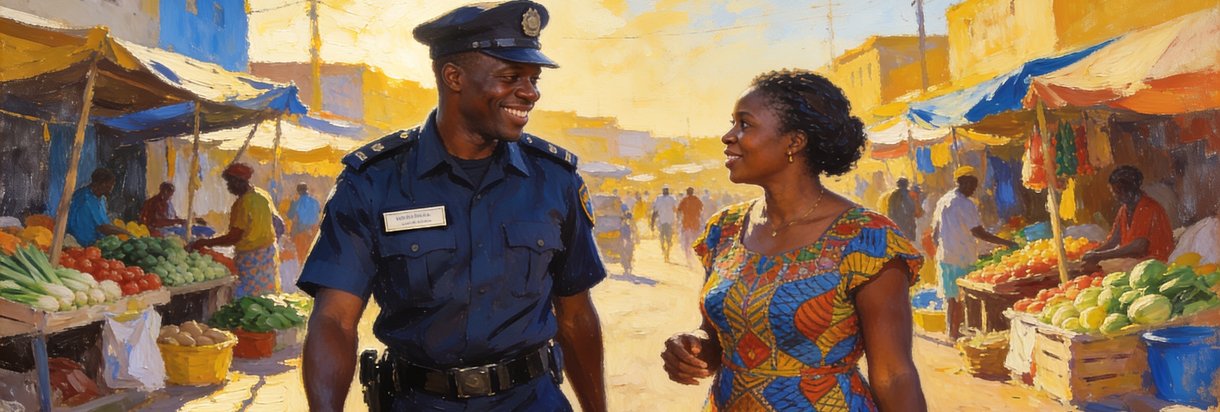
Few relationships are as fraught, or as consequential, as the one between Nigerians and their police. It shapes whether people report crime, cooperate with investigations, or simply feel safe walking home at night. And it varies sharply from one encounter, and one region, to the next.
A relationship under strain
The 2020 #EndSARS protests laid bare deep public anger over policing, and the years since have brought repeated promises of reform. How far those promises reach everyday encounters — at checkpoints and in stations — is what really moves public trust. Reporting by The Guardian has charted both the pledges and the persistent complaints.
Trust is practical
Where trust is high, people come forward as witnesses and victims, and information flows to those who can act on it. Where it is low, crimes go unreported and communities turn to informal alternatives. That makes public confidence a working measure of the police's effectiveness, not merely its image.
Reform versus reality
Officials cite fresh training, oversight bodies and specialised units as evidence of change. Citizens weigh those against their own experiences, which differ by region and by encounter. Tracked over time, trust signals whether reforms are landing where it counts.
A barometer worth watching
Tracked over time, trust in the police signals whether reforms are reaching the daily interactions that shape how safe, and how heard, ordinary Nigerians feel. It is a quieter measure than any single headline, but arguably a more honest one.
Have your say
How much do you trust the police to act in the public interest? Have your say below.